
Poker strategy · every day
SECOND NATURE POKER
Make winning poker second nature.
How we teach
No fluff. Just the why.
Solver-tested
Every play is checked against solver output, not vibes. If we can't back the number, we don't teach the number.
The why, in plain English
Not "bet here". Why the bet makes money: who calls with worse, who folds better, and what changes when the board does.
Learn in the spot
You make the decision first, then get the reasoning on the spot. That's how it becomes second nature.
On Instagram
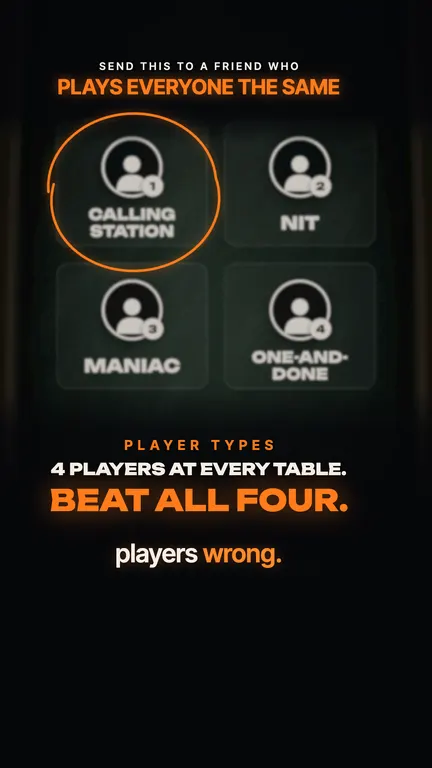
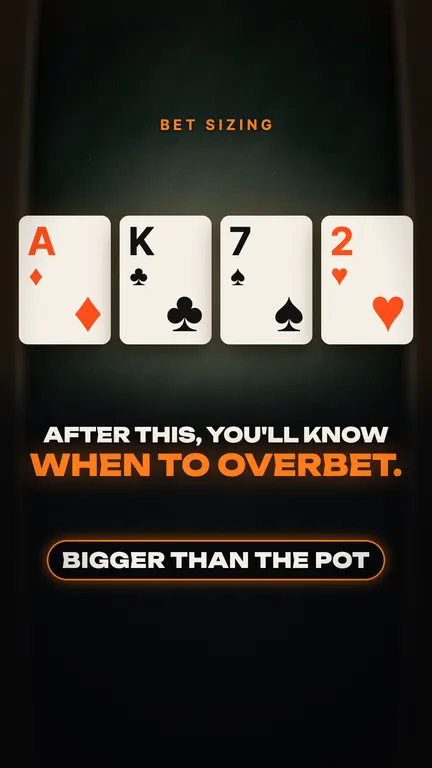
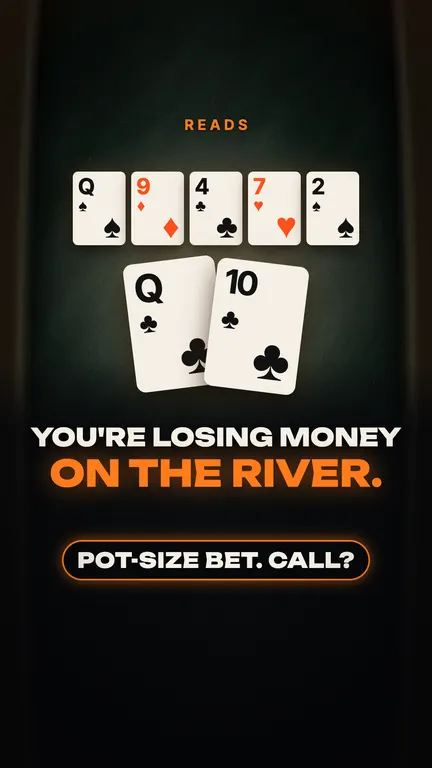
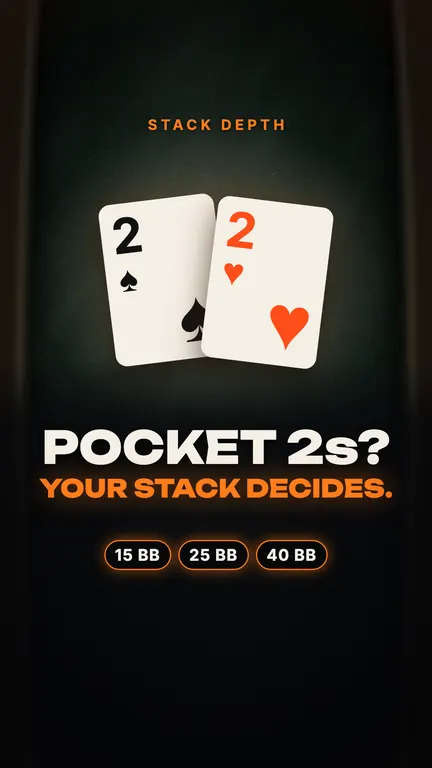
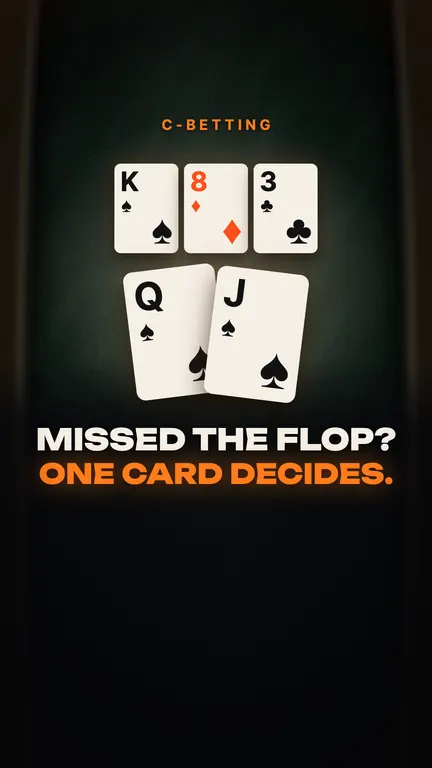
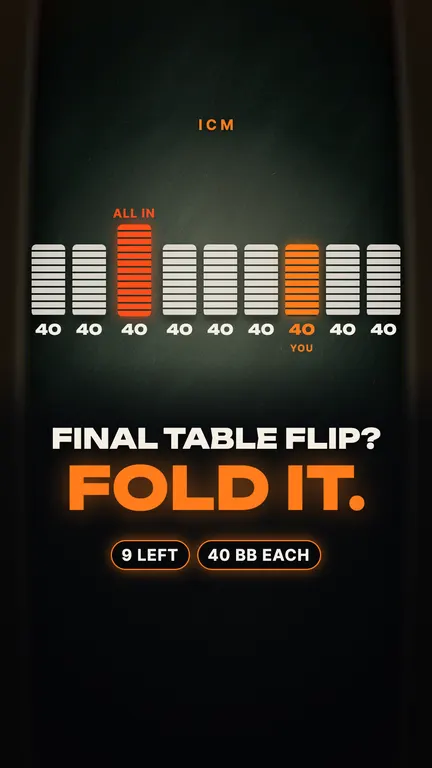
Strategy in 60 seconds
Short animated lessons and pro hand breakdowns. New ones every day.
Free drill · preview
Big blind: jam, call or fold?
10 tournament spots at 20–50bb. Make the call, then get the solver-backed reason. This is how the course teaches.
Big blind · 20bb · BTN opens · ante MTT
You
The button min-raises. You hold K5 suited.
The course · in production
8 chapters. 668 principles.
Built from 58 solver-backed lectures and 3 strategy books, rewritten in plain English. Every lesson ends in drills like the one above.
C01Foundations & Poker MathLearn the price table that every bet, call and bluff is measured against.+
Big ideas
- ▸Equity is not money: position, hand shape, stack depth and range edge decide how much of it you actually keep.
- ▸On the river, B/(P+2B) is both the share of bluffs a balanced bet can hold and the price the caller gets.
- ▸MDF is a floor against raises, not a duty against every bet; the player with the range and nut edge makes you fold more.
- ▸Range edge decides how often you bet; nut edge decides how big you bet.
17 lessons
Fold is zero · Equity you can keep · Buckets and decay · The price table · Defence: floor, ceiling, and when to fold · Semi-bluff arithmetic · Many players, small shares · Mixing and exploiting · Range shapes · Range edge vs nut edge · Why we bet · Sizing I: what a size is for · Sizing II: geometry and traps · Bluff budgets · Blockers and card matching · SPR and position · Checklist drill
C02Preflop by Stack DepthKnow what each hand is worth at 15, 25, 40 and 60bb, and what to do when someone fights back.+
Big ideas
- ▸Stack depth changes what a hand is worth: short stacks reward high cards and blockers, deeper stacks reward playability and nut potential.
- ▸Every raise has a break-even fold rate, risk divided by risk plus reward; antes cut it, so a button min-raise needs only about 43% total folds.
- ▸Below about 25bb, label every raise in advance as raise-fold, raise-call or jam, and stick to the plan.
- ▸Small pairs flip roles with depth: jam 22-33 at 15-20bb, fold them first-in at about 25bb, open them again near 40bb.
17 lessons
What a preflop chart is paying for · The price of every raise · How stack depth rewrites hand value · Opening from every seat · The short-stack toolkit · Small blind and button limps · The big blind: price and defense · Which BB hands jam · Cold-calls, squeezes, overcalls · Building a 3-bet range · Answering a 3-bet · Facing shoves and rejams · Blind vs blind · When ICM changes the chart · Translating cash charts to tournaments · Adjusting preflop to opponents · Drill session
C03C-Betting in PositionPick which hands bet, which check, and which size, flop by flop, at every stack depth.+
Big ideas
- ▸The raiser in position realizes far more of its equity than the big blind, so bet often and mostly small as a baseline.
- ▸Choose size by the job: small bets fold hands with no backdoors, big bets protect vulnerable pairs and fold better hands.
- ▸Opener position changes frequency most on high-card boards: early position bets nearly every king-high flop, the button checks far more.
- ▸Depth reassigns roles: deep on wet boards draws bet and naked top pair checks; at 15bb top pair bets and unpaired draws check.
18 lessons
Why acting last changes everything · The two jobs of a flop bet · Picking a size without memorizing numbers · Who opened? Position and frequency · How stack depth changes the game · Depth flips hand roles · Ace-high boards · King-, queen- and broadway-high boards · Jack-, ten- and nine-high boards · Connected middle boards · Low boards and overbets · Paired boards and trips · Monotone and flush-draw boards · Choosing bluffs and check-backs · Facing a check-raise in position · The turn after the c-bet · Adjusting to opponents · Master table drill
C04Out of Position & Blind DefensePlay the hard seats: c-betting without position, defending the blinds, and check-raising and leading with a plan.+
Big ideas
- ▸Out of position against a positional flat, check is the default, and the later the opener's seat, the less it bets.
- ▸Count the dust: the more unplayable hands in your opening range, the less you can bet high boards.
- ▸Monotone boards are a flush-count problem: if many of his suited hands are blocked, bet small; if few, check and slowplay.
- ▸Blind defense is not MDF: against a bet from the stronger range with position, the blind folds far more than the formula says.
16 lessons
Out of position is a different game · Seat, dust and the high board · Low boards: split nuts and the sizing ladder · Monotone flops out of position · Paired boards, trips and planning the SPR · Defending the blinds: what MDF really says · Check-raise construction · Blind defense special spots and ratios · Flop leads: the map and the depth curve · Short stacks: donk shoves · Turn probes after a flop check · Nudging: equity without nuts · Facing a turn probe · High SPR after check-call, check-check · BvB and double-flush-draw lines · Exploit lab and review
C05Turns & RiversDecide when to barrel, how big to bet, which bluffs to pick, and when to call down.+
Big ideas
- ▸Range edge decides how often you bet and nut edge decides how big; an equity edge without nuts earns only a tiny bet.
- ▸Equity is not EV: the side holding hands the other cannot have collects far more than its equity share.
- ▸Every turn card asks whose calling range it hit, so count the actual combos before calling a card a blank.
- ▸Turn overbets need three things at once: nuts they cannot have, a visibly capped range, and bluffs that profit from folds.
14 lessons
Why you bet: equity, nuts and EV · Reading a turn card · The second barrel · Downbets after a check-raise · The nudge · Delayed bets and stabs · Turn overbets · Facing turn pressure · Geometric planning · River math · Big river bets · River structure by line · Choosing bluffs · Bluff-catching and defence
C063-Bet PotsLow-SPR poker: commit-or-fold flops, few sizes, and shoving the right hands.+
Big ideas
- ▸SPR runs the chapter: at 40bb a 3-bet pot flop is commit-or-fold, at 100bb there are still three streets of play.
- ▸60bb plays like 100bb in frequencies, not like 40bb, with a few selective flop shoves on wet boards.
- ▸The 3-bettor does not always have the edge: high boards favor it, low connected boards favor the caller's suited connectors and pairs.
- ▸Use few sizes: a small bet and a shove at 40bb, a small bet and a half-pot-to-pot bet at 100bb.
12 lessons
Read the pot: SPR and stack depth · Fewer sizes, same EV · High and dry boards as the OOP 3-bettor · Boards the caller owns · Wet middle boards and shoves · Two-high-broadway flops · The IP 3-bettor's playbook · Monotone boards · Turn math in 3-bet pots · Squeezed pots and monster draws · Facing aggression and 4-bet pots · Drills
C07Tournament Play & ICMPrice tournament decisions in dollars not chips, and play short-stack and multiway pots correctly.+
Big ideas
- ▸Chips are not dollars: the more you hold, the less each chip is worth, so the chips you risk cost more than the ones you can win.
- ▸Risk premium is the extra equity you need beyond pot odds for an all-in, and it is biggest when you are covered.
- ▸Always ask who covers whom: the same all-in costs the covered stack far more than the covering one.
- ▸ICM pressure only works on opponents who respect ICM; against chip-EV callers, value-bet and drop the bluffs.
15 lessons
Chips are not dollars · The price of a tournament call · Who covers whom · Micro-stacks and pay jumps · Final-table preflop structure · Postflop under ICM · Bounties · Ten-big-blind flops · Twenty big blinds · Twenty-five to forty: the check-raise ladder · Short-handed and heads-up · Multiway math · Multiway play · Stage map and diagnostics · Case-study workshop
C08Exploits, Study & Mental GameFind the leaks in opponents and in yourself, then build a study loop and a bankroll that last.+
Big ideas
- ▸Exploit by moving one hand class, starting with hands that already mix; a few extra folds can flip a mixed node to pure.
- ▸Size opposite to what he puts in: if he raises a lot, bet small with strong hands; if he never raises, bet bigger and thinner.
- ▸Pools fold unpaired trash to small bets, leads and overbets, do not fold pairs and gutshots on wet boards, and under-bluff rivers.
- ▸Maximal exploits cost the most when wrong, so default to small adjustments a good opponent cannot punish, and revert when he reacts.
14 lessons
Why exploit at all? · Reading a pool without fooling yourself · Node-locking lab · Opponents who fold too much · Opponents who call too much · Opponents who raise and bet too much · Opponents who check too much · Thinking opponents and staying safe · Tournament-stage and recreational exploits · The ranked leak list · A study method that works · Simplifying without losing EV · Variance and bankroll · Mental game and routines
Early access
Course, drills & merch
The interactive course and the store are on the way. Join the list for new free drills and first access when they open.